


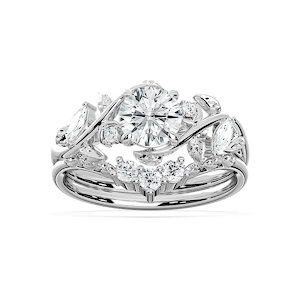

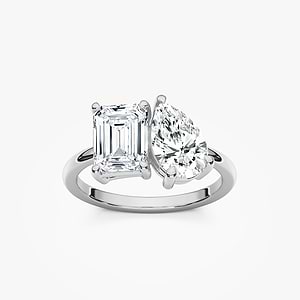
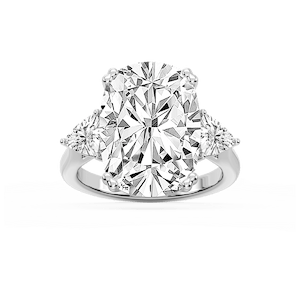


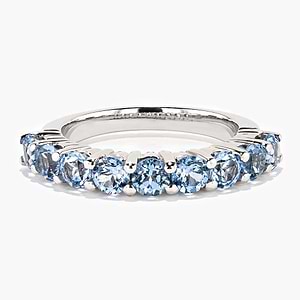










Shape
Shape refers to the appearance of the center stone.
Price
Price range for ring and accessory items are without stones set. Price range for loose stones reflect just the stone, not the ring or accessory added.
Carat Size
Carat weight refers not to the size of the stone, but the weight of it; two stones may have identical carat weights but have different length x width measurements depending on the cut. If you want to choose a smaller carat weight stone, opt for a higher cut grade, as this will make the stone appear larger.
Color
White diamonds range from D-F (colorless), G-H (near colorless & very difficult to detect), I-J (near colorless with slightly detectable warmth), K-Z (noticeable color). Color presents itself as a pale yellow. With Fancy Color diamonds, the intense grades will be the most color saturated.
Clarity
Clarity refers to the tiny inclusions (blemishes) in a stone, and whether or not they are visible to the naked eye. Eye-clean diamonds, which are those without visible inclusions, will fall into the range of VVS1-SI1. As long as you choose a stone within that range, you will not need to worry about seeing inclusions, especially if you are selecting a stone with a higher cut grade.
Cut
The Cut of a diamond is the greatest influencer on the sparkle and brilliance of the stone, which is the first thing we see when looking at a diamond. A poorly cut diamond will appear dull and lifeless even if it is at the upper end of the color and clarity scales. As a general rule of thumb, stick with cut grades of Very Good or higher; the higher the Cut grade you choose, the lower you can go in the other C's without it significantly affecting the beauty of the stone.
Quality
Do you prioritize the diamond's quality or size first? Let us help you find the perfect diamond by selecting what is most important to you.
Superior Quality: D-F Color, IF-VVS2 Clarity, and Ideal Cut lab grown diamonds are considered superior quality.
Bigger Diamond: If you prefer a larger carat weight, this selection will filter larger diamond sizes within your carat weight range with the best price points.
| Shape | Carat | Cut | Color | Clarity | Price |
|---|
Filter
-
Shape
ShapeRound Cut
The most brilliant and timeless diamond shape. Its 58 precisely cut facets maximize light return, creating unmatched sparkle and fire.
Oval Cut
An elongated take on the classic round brilliant. Its graceful silhouette elongates the finger and appears larger than a round of equal carat weight.
Emerald Cut
A sophisticated rectangular shape with step-cut facets and cropped corners. Known for its hall-of-mirrors effect and understated, vintage-inspired elegance.
Cushion Cut
A romantic square shape with softly rounded corners. Combines brilliant faceting with a pillow-like silhouette for a warm, antique-inspired look.
Marquise Cut
An elongated shape with pointed ends, inspired by the smile of Marquise de Pompadour. Maximizes carat weight and creates a striking, regal appearance.
Radiant Cut
A rectangular or square shape with trimmed corners and brilliant faceting. Offers exceptional sparkle paired with the clean lines of an emerald silhouette.
Pear Cut
A graceful teardrop shape that blends the brilliance of a round with the elegance of a marquise. Worn with the point facing the fingertip for an elongating effect.
Princess Cut
A contemporary square shape with sharp, uncut corners and brilliant faceting. Delivers modern geometry with exceptional fire and light performance.
Asscher Cut
A square step-cut shape with deeply cropped corners, giving it an octagonal silhouette. Celebrated for its Art Deco heritage and mesmerizing concentric facets.
Heart Cut
A romantic and unmistakable symbol of love. This brilliant-faceted shape requires precise symmetry to achieve its iconic silhouette.
Elongated Cushion Cut
A refined variation of the classic cushion, stretched into a rectangular silhouette. Offers the softness of rounded corners with a longer, more elegant profile. -
Price
165.40 - 62198.50PricePrice range for ring and accessory items are without stones set. Price range for loose stones reflect just the stone, not the ring or accessory added.
Quick Filter: -
Carat
2 ct - 27.34 ctCarat SizeCarat weight refers not to the size of the stone, but the weight of it; two stones may have identical carat weights but have different length x width measurements depending on the cut. If you want to choose a smaller carat weight stone, opt for a higher cut grade, as this will make the stone appear larger.
Quick Filter: -
Color
F - DColorWhite diamonds range from D-F (colorless), G-H (near colorless & very difficult to detect), I-J (near colorless with slightly detectable warmth), K-Z (noticeable color). Color presents itself as a pale yellow. With Fancy Color diamonds, the intense grades will be the most color saturated.
-
Clarity
VS1 - IFClarityClarity refers to the tiny inclusions (blemishes) in a stone, and whether or not they are visible to the naked eye. Eye-clean diamonds, which are those without visible inclusions, will fall into the range of VVS1-SI1. As long as you choose a stone within that range, you will not need to worry about seeing inclusions, especially if you are selecting a stone with a higher cut grade.
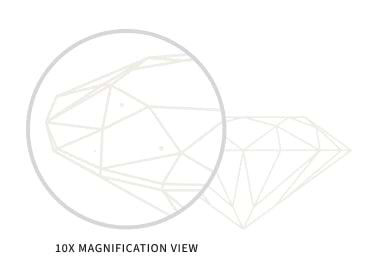
VS stands for Very Slightly Included. While some diamonds among this clarity grade do not have inclusions visible to the naked eye, some may have a few visible inclusions. The larger the carat weight, the more visible inclusions will be. There are two sub-categories of VS diamonds: VS1 and VS2.
-
Cut
Excellent - IdealcutThe Cut of a diamond is the greatest influencer on the sparkle and brilliance of the stone, which is the first thing we see when looking at a diamond. A poorly cut diamond will appear dull and lifeless even if it is at the upper end of the color and clarity scales. As a general rule of thumb, stick with cut grades of Very Good or higher; the higher the Cut grade you choose, the lower you can go in the other C's without it significantly affecting the beauty of the stone.
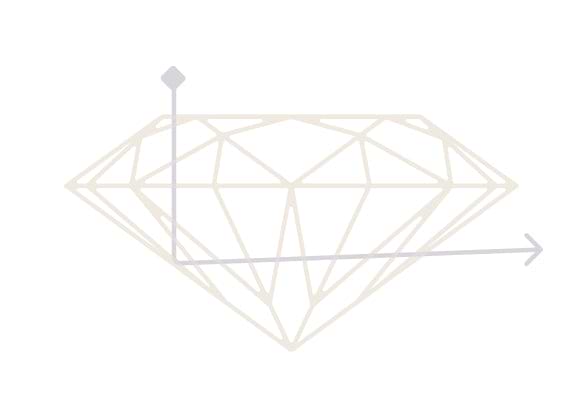
A Good Cut diamond has acceptable proportions and reflects a fair amount of light, offering noticeable sparkle.
-
Advanced Filters
-
Certified
CertifiedDiamond grading is the process of evaluating and assigning grades to diamonds based on various criteria that determine their quality and value. Grading involves assessing and quantifying the diamond's characteristics, such as its color, clarity, cut, and carat weight. These factors are commonly known as the "Four Cs" of diamond grading. Pro Tip: Since the grading of a diamond determines its value, it is very important to purchase a diamond with an independent grading report from an American grading laboratory, such as the GIA or other reputable organizations such as GCal and IGI.
-
Fancy Color
Fancy ColorFancy Color diamonds can come in a wide range of colors, including shades of yellow, brown, pink, blue, green, orange, and even rare colors like red and violet. Fancy Color diamonds are graded on a separate color grading scale from colorless diamonds D to Z. The grading system for Fancy Color diamonds includes nine categories: Fancy Light, Fancy, Fancy Intense, Fancy Vivid, Fancy Dark, Fancy Deep, Fancy Light Grayish, Fancy Grayish, and Fancy Deep Grayish.
-
L:W RATIO
0 - 3L:W RatioThe length to width ratio in a diamond refers to the proportionate relationship between the length and width of the diamond's top view. It is a numerical expression that describes the diamond's elongation or compactness. For example, square-shaped diamonds (princess or cushion cuts), with a length to width ratio of around 1.00 to 1.05 indicate a square appearance, while ratios higher than 1.05 start to exhibit a rectangular appearance. The preference for the specific ratio varies based on personal taste, with some individuals favoring longer, slender shapes, and others preferring more balanced or compact proportions.
-
Table%
0% - 100%Table %The table percentage grading of a diamond refers to the measurement of the table facet (the top flat surface area of the diamond) in relation to the overall diameter of the diamond. The table percentage is considered an important aspect of a diamond's cut quality and can impact its visual appearance. The ideal table percentage can vary depending on the diamond shape, as different shapes have different optimal proportions.
-
Fluorescence
FluorescenceDiamond fluorescence refers to the visible glow or emission of light that some diamonds exhibit when exposed to ultraviolet (UV) light. This phenomenon is a result of certain trace elements present in the diamond's crystal structure, such as nitrogen. When these elements interact with UV light, they can cause the diamond to emit a visible fluorescence. The intensity of diamond fluorescence is typically described on a scale ranging from None to Very Strong.
-
Polish
PolishThe polish grading of a diamond refers to the assessment of the quality of its surface finish or polish. It evaluates how well the diamond's facets have been polished to create a smooth and reflective surface. The polish grade is an important factor in determining the overall appearance and beauty of a diamond.
-
Symmetry
SymmetryThe symmetry of a diamond refers to the precision and quality of its cut and the alignment of its facets. It assesses how well the various facets of a diamond are shaped, positioned, and aligned in relation to one another. Symmetry plays a crucial role in the overall appearance, brilliance, and fire of a diamond.
-
Depth%
0 % - 100 %Depth%The depth percentage of a diamond refers to the measurement of the diamond's depth in relation to its overall diameter. It is expressed as a percentage and helps evaluate the proportions of the diamond. It plays a role in how light interacts with the diamond, affecting its brilliance, fire, and overall sparkle. Different diamond shapes and cutting styles have different optimal depth percentage ranges. For example, it is normal for a Cushion Shape diamond to have more depth than a Round Shape diamond.
-

