



















What It Is and Why It Matters
When shopping for a diamond — especially a lab-grown diamond — understanding clarity is key to making an informed decision. Many buyers focus on size or sparkle first, but clarity plays a direct role in how brilliant and clean a diamond actually appears.
What Is Diamond Clarity?
Diamond clarity refers to the purity of a diamond — specifically, how free it is from internal inclusions (natural formations within the stone) and external blemishes (surface-level markings). These are a normal part of how a diamond forms, whether it's grown in a lab or mined from the earth.
Clarity is graded by gemologists under 10x magnification. Most inclusions are invisible to the naked eye, but they can still influence:
- Brilliance — how much light the diamond reflects and refracts
- Transparency — how clear or cloudy the diamond appears
- Durability — in rare cases, large inclusions can affect the stone's structural integrity
The Diamond Clarity Scale
Clarity is graded on an industry-standard scale ranging from Flawless (FL) to Included (I3):
- Flawless (FL): No inclusions or blemishes visible under 10x magnification. Extremely rare.
- Internally Flawless (IF): No internal inclusions; only minor surface blemishes visible under magnification.
- Very, Very Slightly Included (VVS1 & VVS2): Minute inclusions, extremely difficult to detect under magnification.
- Very Slightly Included (VS1 & VS2): Minor inclusions, somewhat visible under magnification but invisible to the naked eye.
- Slightly Included (SI1 & SI2): Noticeable inclusions under magnification; some may be visible to the naked eye depending on the stone.
- Included (I1, I2, I3): Obvious inclusions, often visible to the naked eye, which can affect brilliance and, in some cases, durability.
MiaDonna's diamonds are certified by IGI, the leading grading authority for lab-grown diamonds, using this same clarity scale.
Which Clarity Grade Should You Choose?
Clarity can significantly affect price — but not always beauty. With the right guidance, you can find a diamond that's "eye clean" (free of visible imperfections to the naked eye) without overspending.
- For top-tier perfection: FL or IF grades offer the highest clarity available, at the highest end of the price range.
- For balanced value and beauty: VS1, VS2, and SI1 diamonds often appear flawless to the naked eye and represent some of the strongest value on the scale.
- For budget-conscious buyers: SI2 and even I1 diamonds can look beautiful, especially when inclusions are minimal or well-placed.
Diamond Clarity Comparison Table
| Clarity Grade | Description | Visibility of Inclusions | Price Tier | Best For |
|---|---|---|---|---|
| Flawless (FL) | No inclusions or blemishes under 10x magnification | None, even under magnification | Highest | Perfectionists and collectors seeking the rarest diamonds |
| Internally Flawless (IF) | No internal inclusions; minor blemishes under magnification | None to minimal under magnification | Very high | Buyers who want near-perfect clarity without going FL |
| VVS1 / VVS2 | Minute inclusions, extremely hard to see under magnification | Invisible to the naked eye | High | Buyers wanting exceptional clarity without FL/IF pricing |
| VS1 / VS2 | Minor inclusions, slightly easier to detect under magnification | Invisible to the naked eye | Moderate | Buyers balancing clarity and price |
| SI1 / SI2 | Noticeable inclusions under magnification; some visible to the naked eye | May be visible in certain lighting | Value-focused | Buyers who want a beautiful diamond at a lower cost |
| Included (I1–I3) | Obvious inclusions, often visible to the naked eye | Visible inclusions that may affect brilliance | Most accessible | Buyers prioritizing size or cut over clarity |
How Inclusions Are Evaluated
Gemologists assess clarity based on several factors:
- Size: How large is the inclusion?
- Number: How many are present?
- Location: Central (more visible) or near the edge (easier to hide)?
- Nature: Internal (inclusion) or surface-level (blemish)?
- Visibility: How noticeable under 10x magnification?
These details are documented in a diamond clarity diagram, included in a certified grading report — a visual map showing the location and type of any imperfections.
Insider Tip: Ask About "Prong Inclusions"
Looking to stretch your budget further? Ask about diamonds with prong inclusions — imperfections located near the edge of the stone. Once the diamond is set, the setting's prongs naturally hide these flaws.
Why it works:
- You get a lower-priced diamond without a visible trade-off in quality.
- The inclusions are concealed by the setting itself.
Our personal shoppers can help identify diamonds with well-placed prong inclusions for excellent value.
How Shape and Size Impact Clarity
Not all diamonds show inclusions the same way — shape and carat size both affect how visible imperfections are.
Shape Considerations
- Brilliant cuts (Round, Oval, Cushion, Marquise, Pear): Many facets scatter light, making inclusions harder to spot — often allowing for a lower clarity grade.
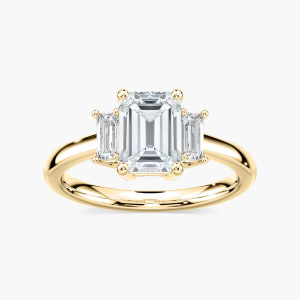
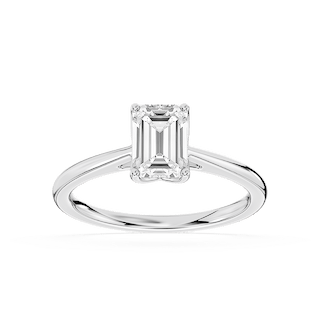
- Step cuts (Emerald, Asscher): Large, open facets highlight clarity more directly — a higher clarity grade is worth prioritizing here.
Size Considerations
- Larger diamonds: More surface area makes inclusions more noticeable — prioritize higher clarity as carat weight increases.
- Smaller diamonds: Naturally hide imperfections better, offering more flexibility on clarity grade.
Common Types of Inclusions and Blemishes
Inclusions (Internal)
- Cloud: A cluster of tiny crystals inside the diamond
- Feather: A small internal crack or fracture
- Crystal: A mineral deposit within the diamond
- Needle: A long, thin crystal inclusion
- Knot: An inclusion that reaches the surface
Blemishes (Surface)
- Scratch: A fine line on the surface
- Pit: A small hole or depression
- Nick: A tiny chip on the edge or girdle
- Polish line: A leftover line from the finishing process
Frequently Asked Questions About Diamond Clarity
What is the best diamond clarity for engagement rings?
It depends on your priorities and budget. For maximum clarity, FL or IF grades deliver true perfection. That said, most people find VS1, VS2, or even SI1 diamonds stunning and more budget-friendly, since they typically appear flawless to the naked eye.
Are inclusions in lab-grown diamonds visible to the naked eye?
Not always. Many lab-grown diamonds graded VS or SI1 are "eye clean," meaning their inclusions are invisible without magnification. Our diamond experts can help you find a stone with minimal visible imperfections.
How does diamond clarity affect price?
Clarity has a significant impact on price, especially at the top of the scale — FL diamonds are rare and command the highest prices, while SI1 and SI2 diamonds offer excellent value without sacrificing visible beauty.
Is diamond clarity more important than cut or carat?
Not necessarily. Cut has the biggest impact on a diamond's sparkle, and carat determines size — a well-cut diamond with a slightly lower clarity grade can still look breathtaking.
What are prong inclusions, and why are they a good option?
Prong inclusions are imperfections near a diamond's edge that get hidden by the prongs of its setting — a smart way to save money without a visible trade-off.
Do larger diamonds require higher clarity grades?
Generally, yes. Larger diamonds have more surface area, which can make inclusions more noticeable. For stones over 1.5 carats, a clarity grade of VS2 or higher is worth prioritizing for the best visual appeal.
Do lab-grown diamonds have fewer inclusions than mined diamonds?
Lab-grown diamonds are created in controlled environments, which can result in fewer or more predictable inclusions compared to mined diamonds of similar quality — often making a higher clarity grade more attainable for the price.
Clarity Is About Strategy, Not Perfection
You don't need a flawless diamond to own a breathtaking one. With lab-grown diamonds, you already get strong value and peace of mind — choosing the right clarity grade is about finding the balance that fits your priorities.
Still deciding? Our diamond experts are here to help. Book a one-on-one appointment for personalized advice, and let us guide you to the perfect clarity grade for your lab-grown diamond engagement ring or fine jewelry piece.

