



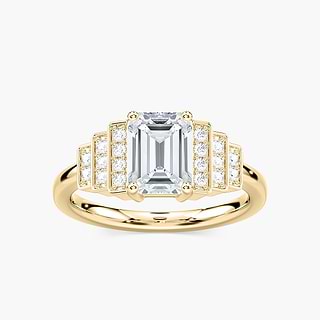
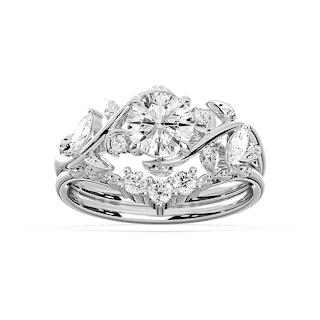
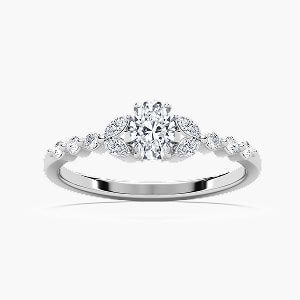
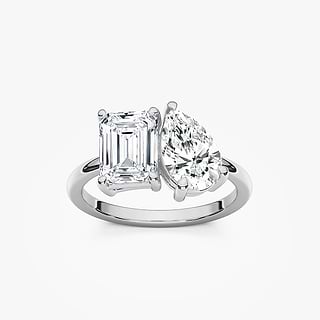
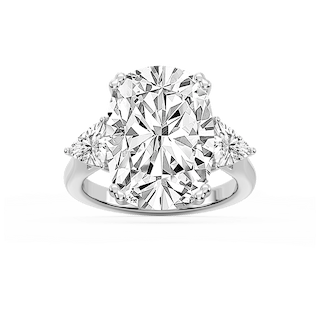
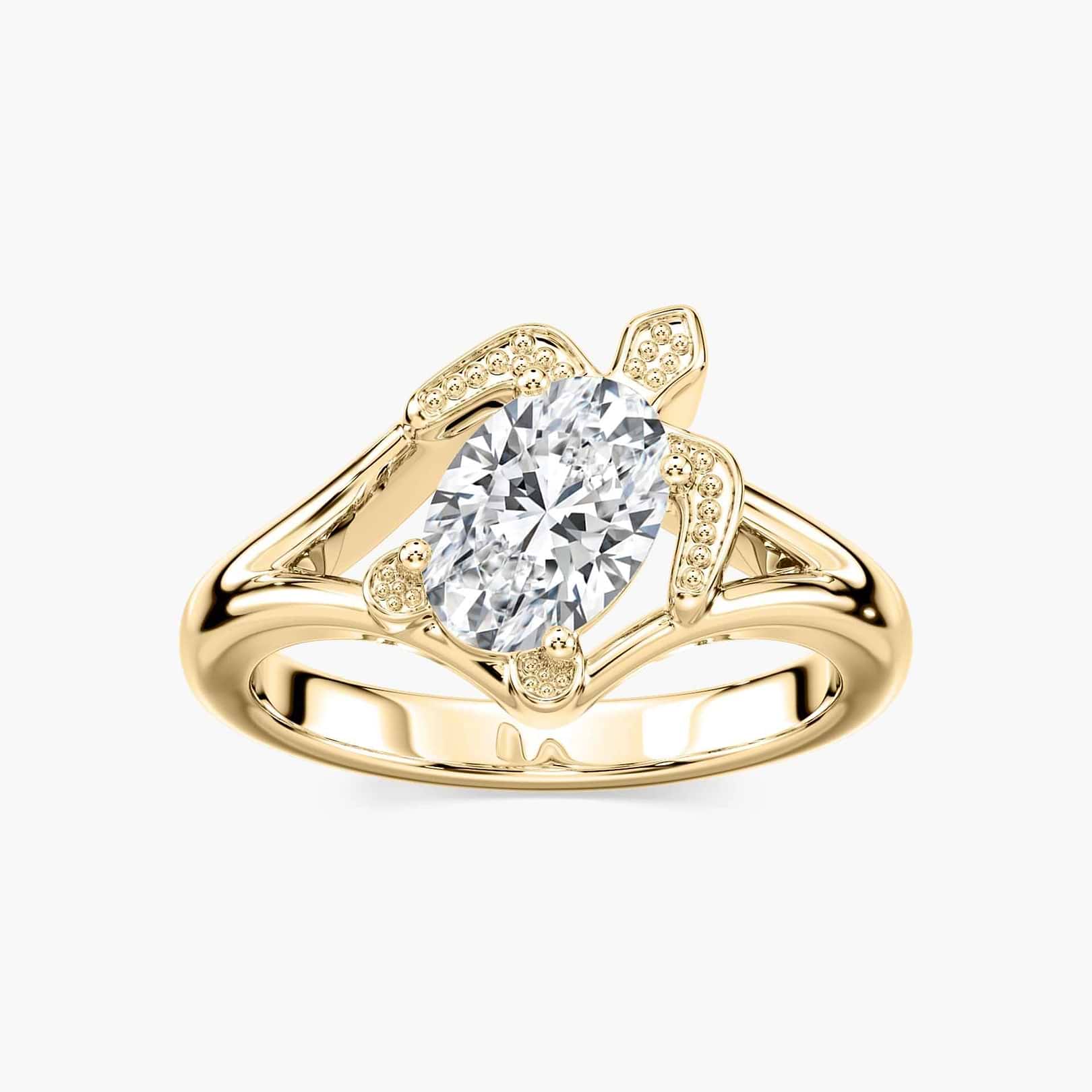
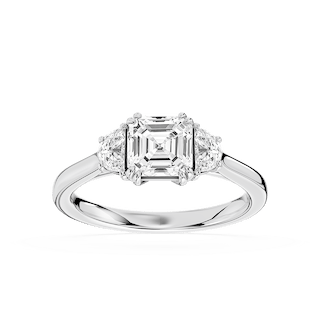
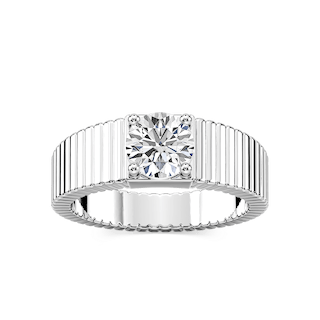















Choosing a lab-grown diamond engagement ring involves more than finding a diamond you love. It's a significant purchase, so it's worth understanding what actually affects a ring's appearance, quality, durability, and value before you buy.
Lab-grown diamonds are now a mainstream option alongside mined diamonds, and more options make it easier to find a ring that fits your preferences, style, and budget. It can also make comparison shopping harder. This guide breaks down the factors that actually matter, drawing on what we've learned as the original lab-grown fine jeweler since 2005.
Look beyond carat weight and price. The diamond's cut, color, clarity, and carat weight, along with its grading report and overall appearance, make all the difference. Then come the setting, metal, and craftsmanship that shape the ring's look, comfort, and durability.
The retailer matters too. Pricing, warranties, return and resizing policies, shipping, and other services all shape the buying experience and your confidence in the purchase.
Understanding how these factors work together helps you compare rings more objectively and choose an engagement ring that fits your preferences, budget, and expectations for years to come.
WHAT ARE LAB-GROWN DIAMONDS?
Lab-grown diamonds are real diamonds created in a controlled laboratory rather than formed underground and mined. They share the same chemical composition, crystal structure, and optical properties as mined diamonds, and are graded on the same 4Cs: cut, color, clarity, and carat weight. They are not simulants, lookalikes, or fakes.
How Are Lab-Grown Diamonds Made?
Lab-grown diamonds are produced using one of two methods:
- Chemical vapor deposition (CVD): grows diamond layer by layer from carbon-rich gas around a diamond seed.
- High-pressure, high-temperature (HPHT): recreates the extreme heat and pressure under which diamonds form in nature.
Both methods produce real diamonds, and neither determines quality on its own. Quality is judged by the 4Cs. Here's a quick comparison of CVD and HPHT lab-grown diamonds.
| CVD (Chemical Vapor Deposition) | HPHT (High-Pressure, High-Temperature) | |
|---|---|---|
| How it works | Carbon-rich gas is broken down, and carbon atoms build up layer by layer on a diamond seed | Carbon is exposed to extreme heat and pressure, recreating the conditions deep in the earth |
| Growth environment | Low-pressure chamber | Heavy press at very high pressure and temperature |
| Growth pattern | Grows in flat layers | Grows outward in multiple directions |
| Post-growth treatment | Often treated after growth to improve color | Less often needed |
| Possible inclusions | Small dark carbon spots | Small metallic inclusions from the growth process |
| On the grading report | Identified as laboratory-grown, usually with the growth method noted | Identified as laboratory-grown, usually with the growth method noted |
| Appearance once polished | Can't be told apart from HPHT by eye | Can't be told apart from CVD by eye |
| Hardness and durability | 10 on the Mohs scale, the same as any diamond | 10 on the Mohs scale, the same as any diamond |
| How quality is judged | The 4Cs | The 4Cs |
Growth method doesn't make one diamond better than the other. Compare individual stones on their 4Cs and grading report.
LAB-GROWN VS. NATURAL DIAMONDS
The main difference is origin. Lab-grown diamonds are created in a laboratory, while natural diamonds form deep in the earth over geological time and are mined. Both are graded on the 4Cs and share the same physical properties.
Lab-grown diamonds are also different from simulants. Moissanite and cubic zirconia can resemble diamonds, but they are different materials. Here's a quick overview to help you compare. For a deeper look, see our lab-grown diamond comparison guide.
| Lab-Grown Diamond | Natural Diamond | |
|---|---|---|
| Origin | Created in a laboratory | Formed naturally underground |
| Composition | Carbon in diamond crystal structure | Carbon in diamond crystal structure |
| Grading | Evaluated using the 4Cs | Evaluated using the 4Cs |
| Identification | Grading report identifies it as laboratory-grown | Grading report identifies it as natural |
START WITH YOUR ENGAGEMENT RING BUDGET
Set a comfortable spending range before comparing diamonds and settings. Skip the outdated "months of salary" rule and let what you're comfortable spending guide your choices. Then decide where your priorities sit:
- Center diamond first: put more toward size or quality and choose a simpler setting or metal.
- Design first: invest in the setting, metal, or customization and adjust the diamond to match.
Also account for additional costs, such as certification and any services included with the purchase.
Why Lab-Grown Diamonds Can Change Your Budget
Lab-grown diamonds give you more flexibility within the same budget. You can put it toward a larger stone, a better cut, or a more detailed setting. The goal isn't the biggest diamond possible. It's the combination of diamond and design that gives you the look and quality you value most.
CHOOSE THE RIGHT DIAMOND SHAPE FOR YOUR STYLE
Shape is a diamond's outline. Cut is how its proportions, symmetry, and polish interact with light. Cut terminology and grading vary by shape and grading laboratory, so don't rely on the cut label alone. Compare proportions, symmetry, polish, and any available light-performance data.
Popular Lab-Grown Diamond Shapes
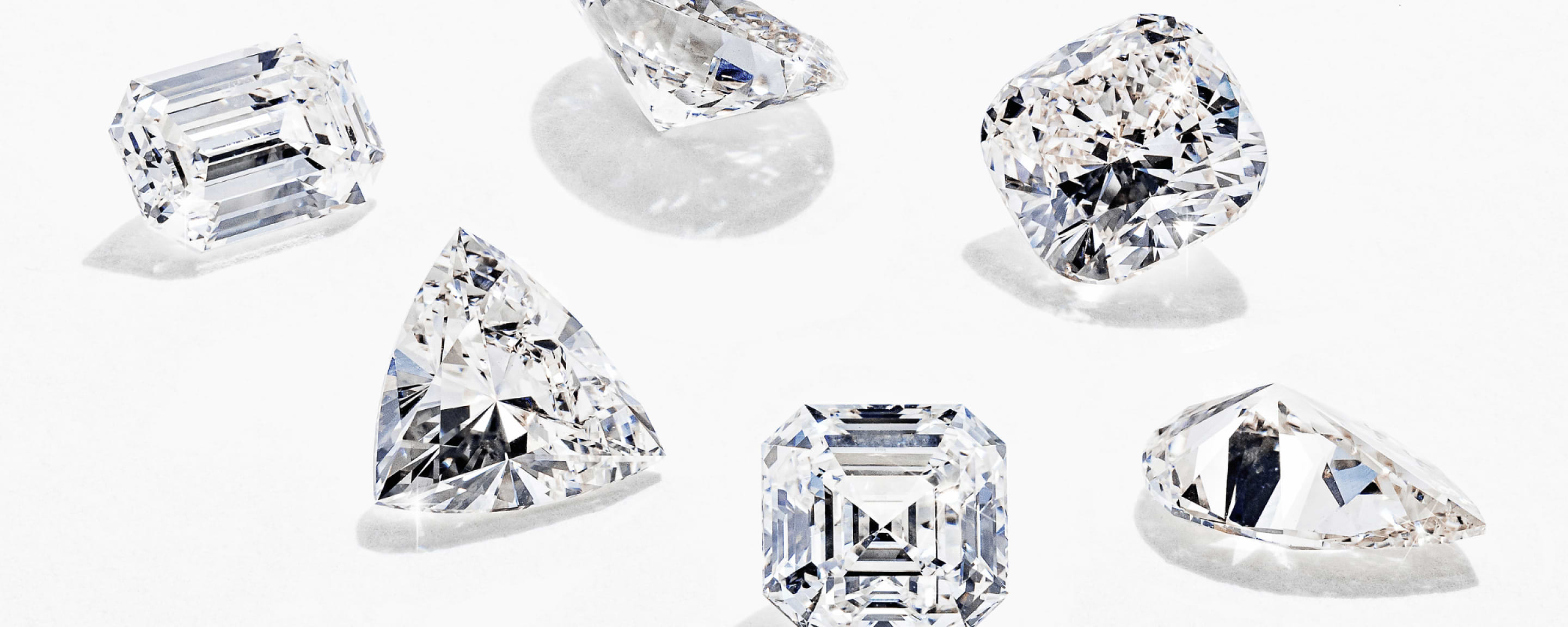
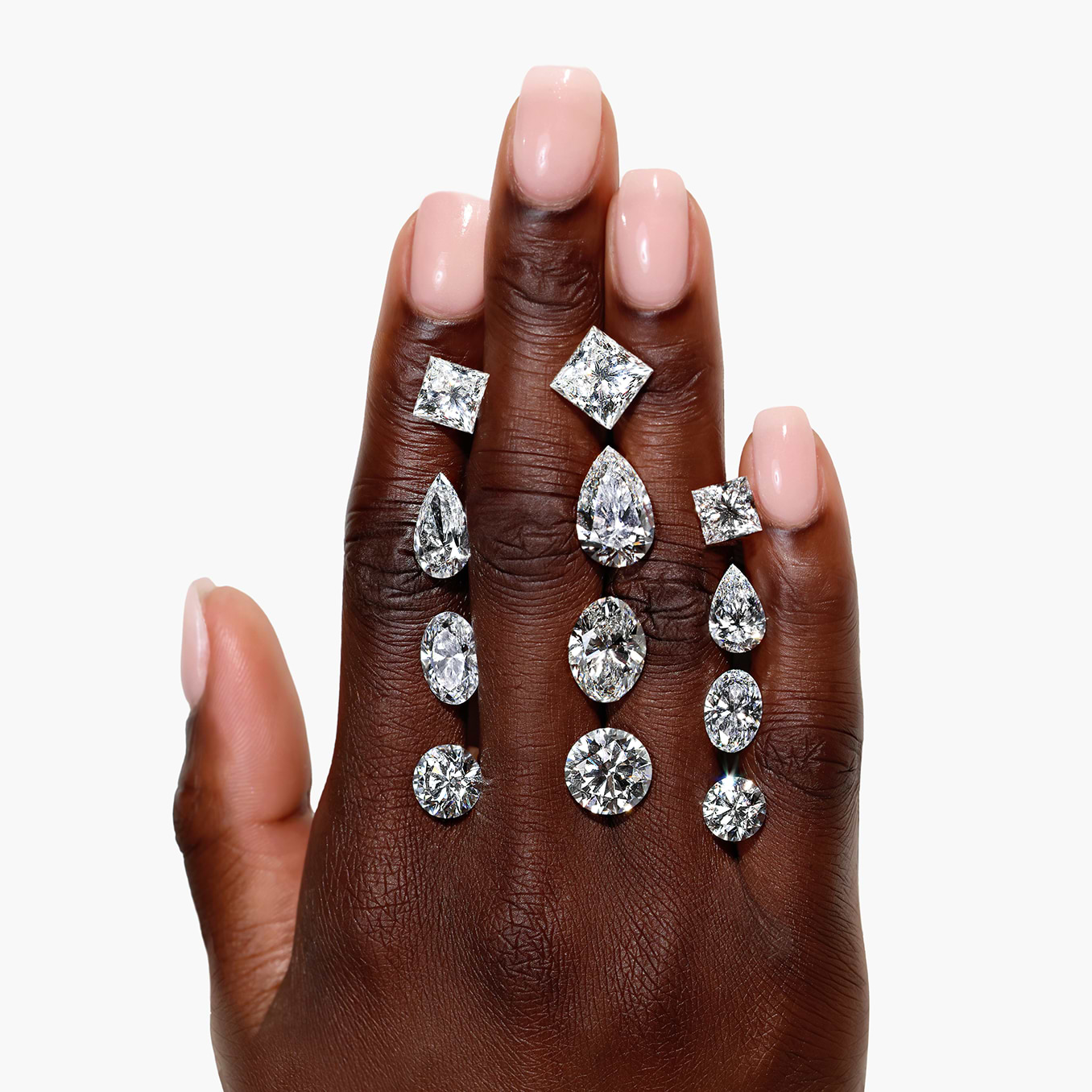
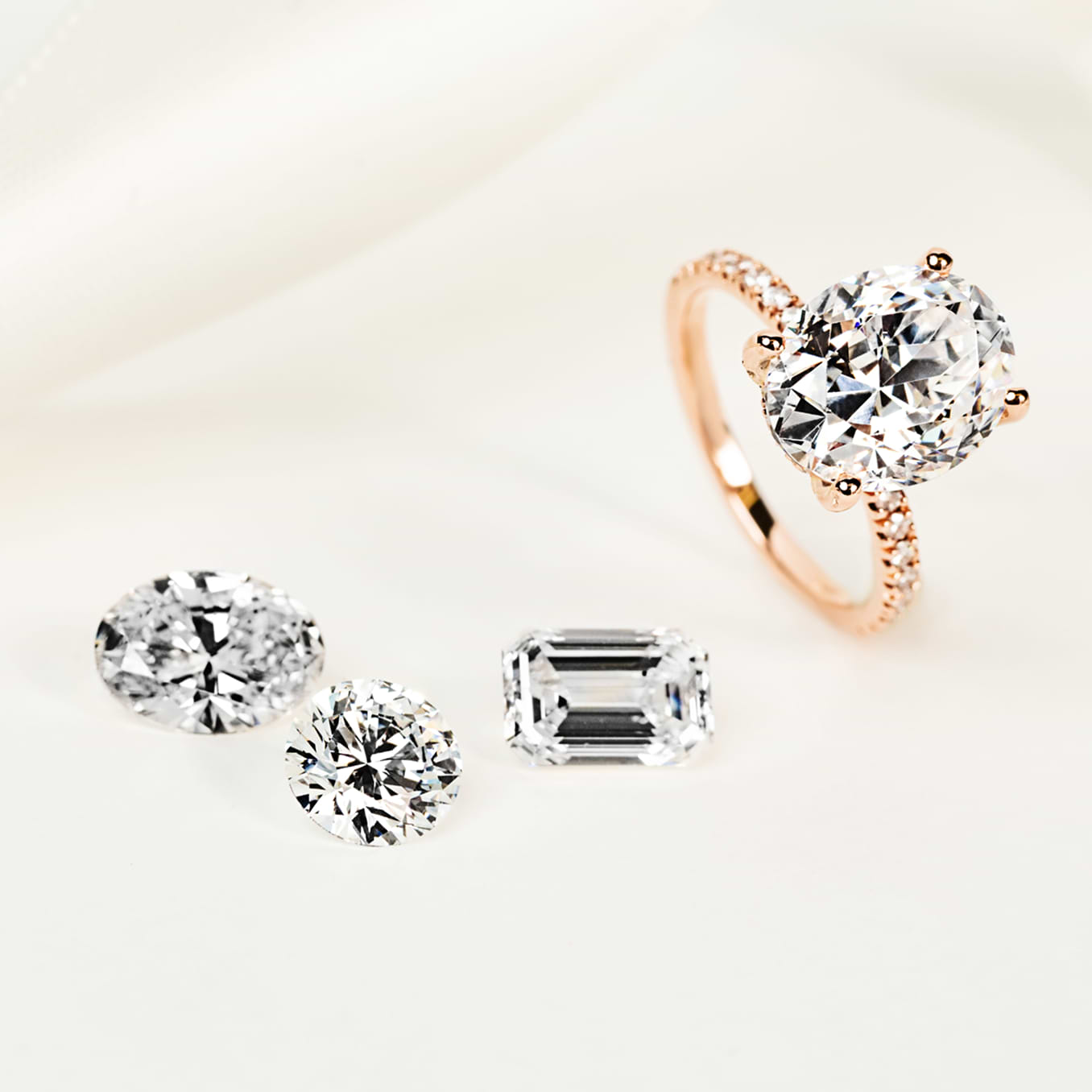
The most popular shapes are round, oval, emerald, cushion, pear, princess, marquise, and radiant.
- Round: the classic choice for lab-grown diamond engagement rings when brilliance is the priority.
- Oval, pear, and marquise: create an elongated look.
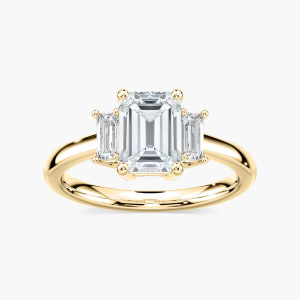
- Emerald: clean lines and broad flashes of light.
- Cushion: rounded corners with brilliant-style faceting.
- Princess: a square, geometric look.
- Radiant: an elongated shape with strong sparkle.
How to Choose the Best Shape
Consider how the shape looks on the finger, whether it suits your preferred setting, and whether you want bold brilliance or a subtler look.
| If you prefer | Consider |
|---|---|
| Maximum brilliance | Round |
| An elongated appearance | Oval, Pear, or Marquise |
| Modern elegance | Emerald or Radiant |
| A soft, romantic look | Cushion |
UNDERSTAND THE 4CS BEFORE YOU BUY
The 4Cs help you compare lab-grown diamond quality, but you don't need the top grade in every category. Focus on how each one affects appearance and price.
| 4C | What It Affects | Buyer Takeaway |
|---|---|---|
| Cut | Brilliance and sparkle | Prioritize for light performance |
| Color | Visible warmth or whiteness | Balance grade with metal and setting |
| Clarity | Visibility of inclusions | Focus on eye-clean appearance |
| Carat Weight | Weight and perceived size | Compare with measurements and shape |
DIAMOND CUT: THE BIGGEST FACTOR IN BRILLIANCE
Cut describes how well a diamond's proportions, symmetry, and polish work together to return light. A better cut produces more brightness, fire, and scintillation. If sparkle matters to you, prioritize cut over carat weight. When comparing cut, look for:
- Brightness: white light reflected back to the eye
- Fire: flashes of color as the diamond moves
- Balance: proportions that create a visually even appearance
DIAMOND COLOR: HOW WHITE THE STONE LOOKS
Color is graded from D to Z. D–F are colorless, and G–J are near-colorless. A higher grade looks whiter, but you don't need the top grade for a bright-looking stone. When comparing color, consider:
- Metal: white metals make warmth easier to see, and yellow and rose gold can mask it.
- Your preferred look: a slightly warmer diamond can complement certain designs.
- What you see: compare stones visually instead of defaulting to the highest grade.
DIAMOND CLARITY: JUDGING VISIBLE INCLUSIONS
Clarity measures inclusions inside a diamond and blemishes on its surface. Higher grades mean fewer or less noticeable characteristics, but a stone doesn't need to be flawless to look clean. VS and SI grades often offer strong value. Two diamonds with the same grade can still look different depending on the type, size, and location of their inclusions, so review images or video when available. When comparing clarity, consider:
Read the Clarity Guide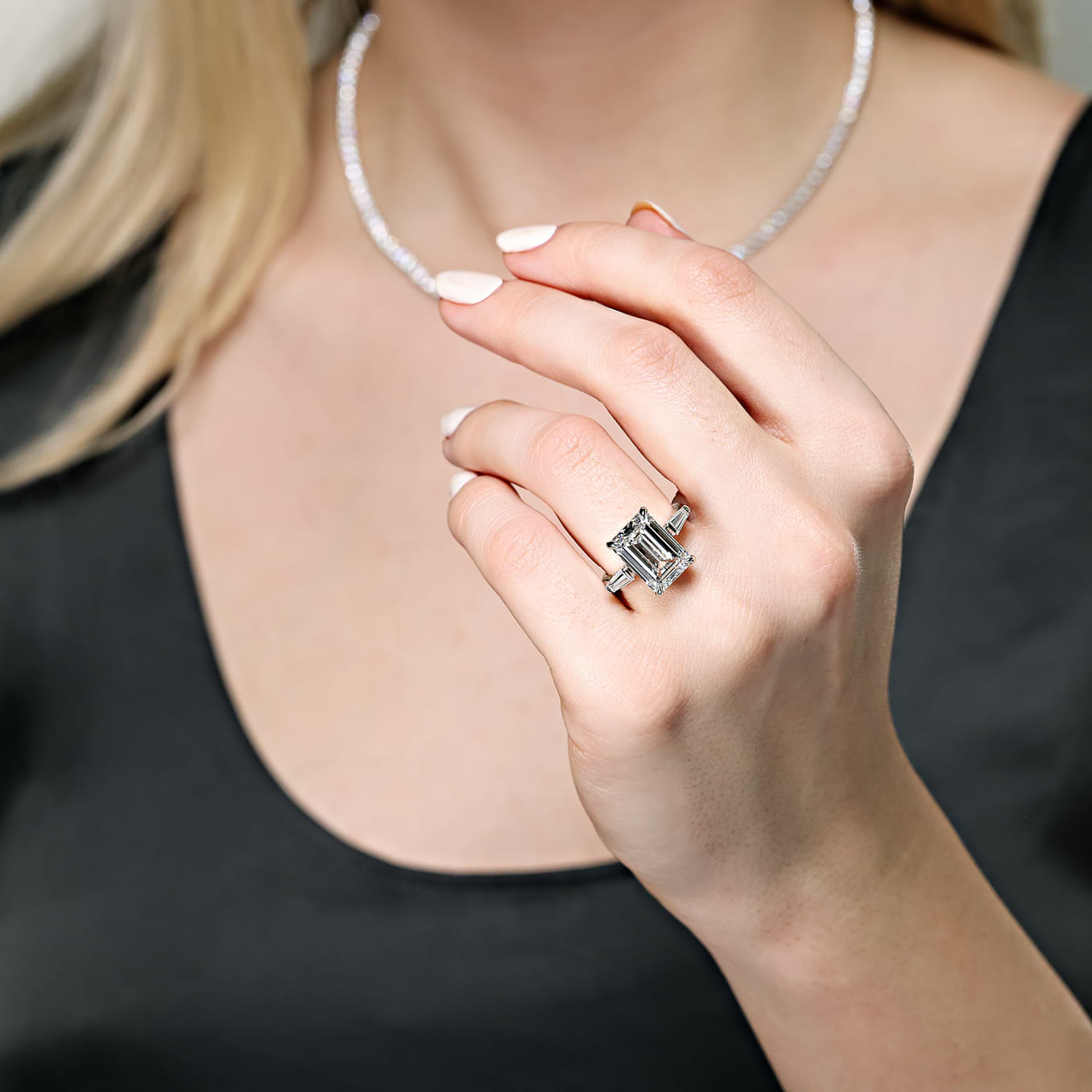
CARAT WEIGHT: BALANCING SIZE AND QUALITY
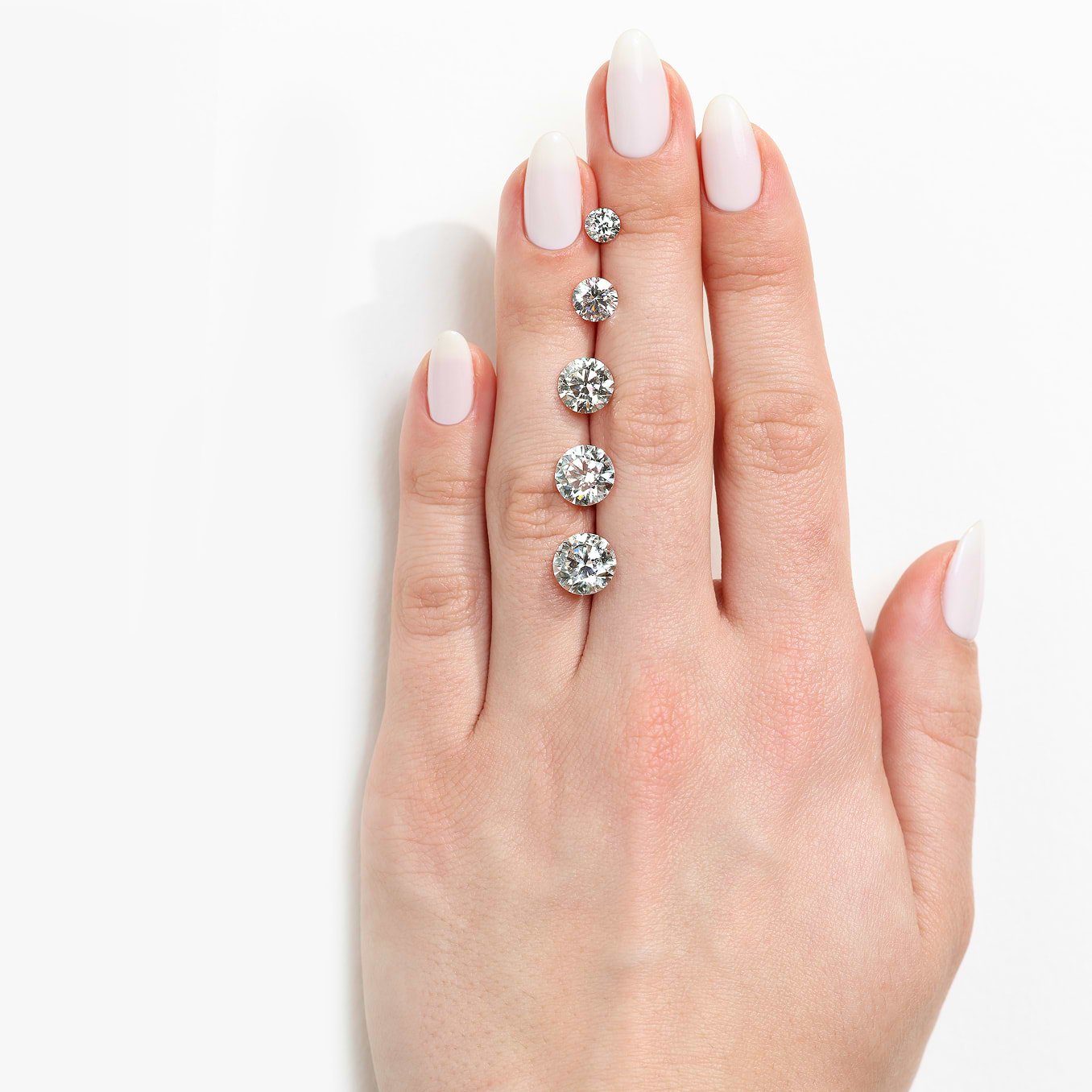
Lab-grown diamond carat size refers to carat weight, which measures weight, not visible size. Two diamonds of the same carat weight can look different from above, so compare measurements, shape, and proportions too. When assessing carat, consider:
- Face-up size: how large the diamond looks from above
- Dimensions: length and width indicate how big it will look on the finger
- Shape and proportions: both influence face-up size on the hand
CHECK THE DIAMOND'S CERTIFICATION AND GRADING REPORT
An independent grading report documents a diamond's key characteristics and confirms that it is laboratory-grown. It gives you a standardized reference for comparing stones and verifying that a diamond matches its specifications.
IGI is the leading independent laboratory for grading lab-grown diamonds. When comparing stones, review the grading details available for IGI-certified lab-grown diamonds.
What to Check on the Report
- Grading laboratory: which independent gemological institute evaluated the diamond
- Report number: use it to verify the report on the laboratory's website
- 4Cs: the documented cut, color, clarity, and carat weight
- Measurements: confirm the stone's size matches the listed specifications
- Identifying details: shape, laser inscription, and description
Entering the report number in the lab's online verification tool confirms that the documentation belongs to the stone you're considering.
View a Sample Report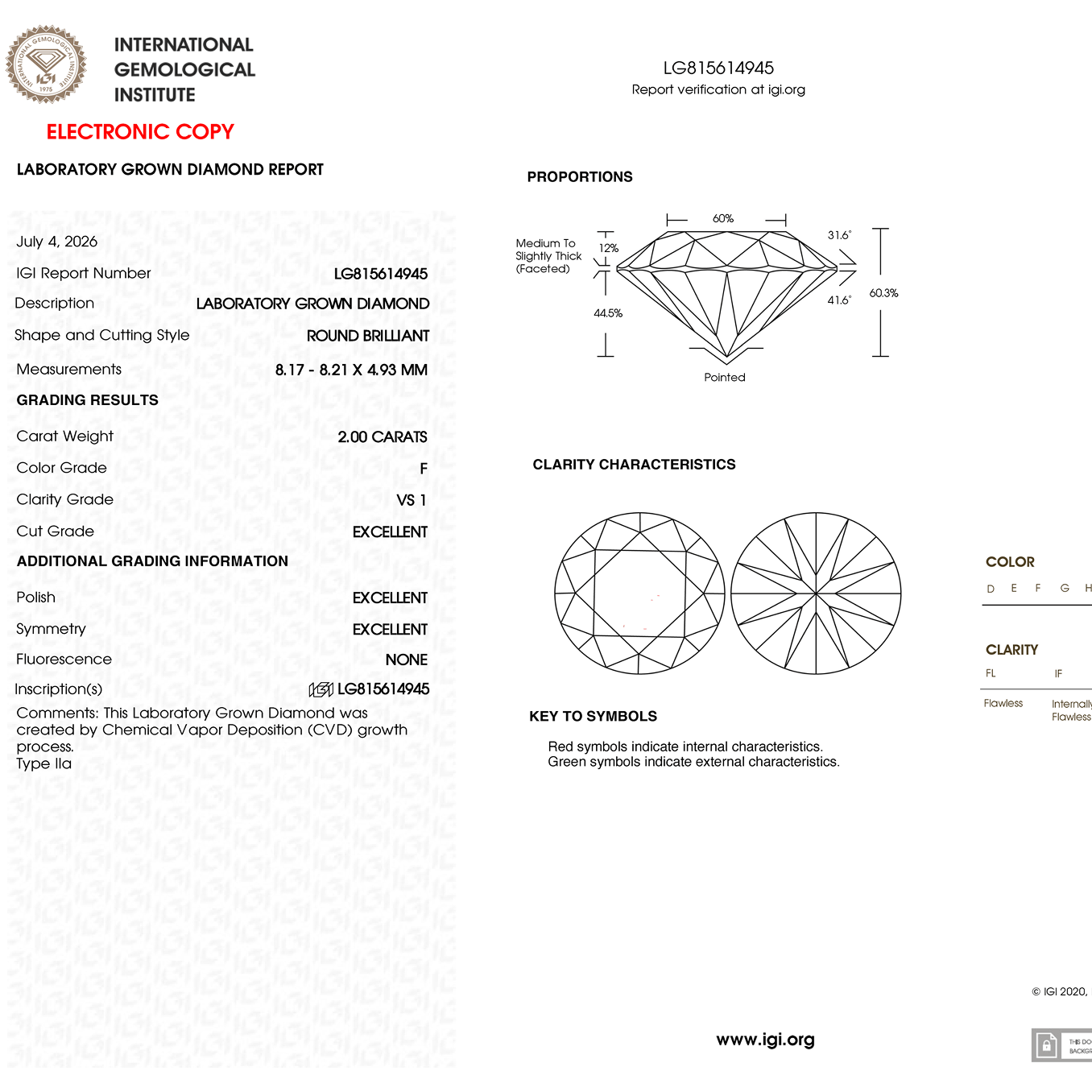
COMPARE DIAMOND QUALITY WITH YOUR BUDGET, NOT JUST THE PRICE
Two lab-grown diamonds can look similar online and still be priced differently. Carat weight, the 4Cs, shape, proportions, certification, and the retailer all affect cost. Look past carat and price to compare:
| What to compare | What to look for |
|---|---|
| Measurements | Length, width, and depth to understand its dimensions and face-up size. |
| Proportions | How the diamond's dimensions work together and how they affect its face-up appearance. |
| Cut and light performance | How well the diamond handles light and whether it shows good brightness and sparkle. |
| Clarity characteristics | Type, size, and location of inclusions rather than relying on the clarity grade alone. |
| Certification | Grading report to confirm the diamond's documented characteristics and laboratory-grown identification. |
| Setting quality | The ring setting's craftsmanship, metal, and how securely it holds the diamond. |
Weigh these against the total price to find the diamond and ring with the best mix of appearance, quality, and value for your budget.
CHOOSE THE RIGHT ENGAGEMENT RING SETTING
The setting does more than hold the center stone securely. It shapes the ring's character, profile, and overall look.
Popular Engagement Ring Settings to Consider
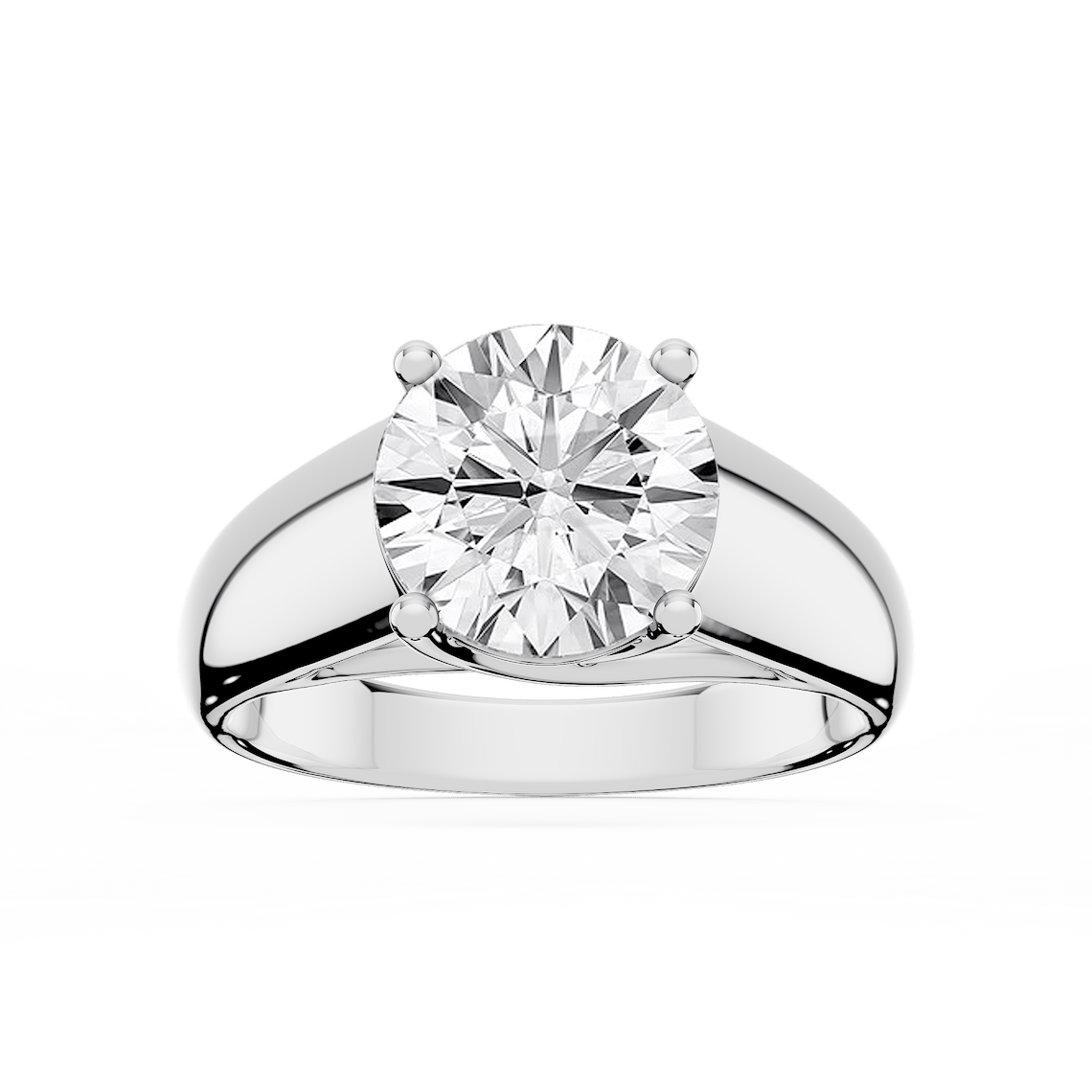
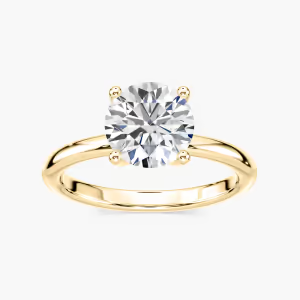
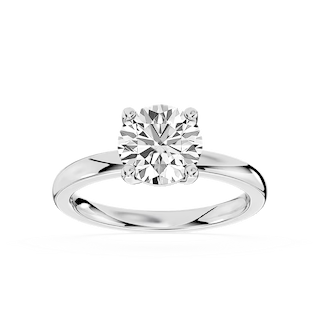
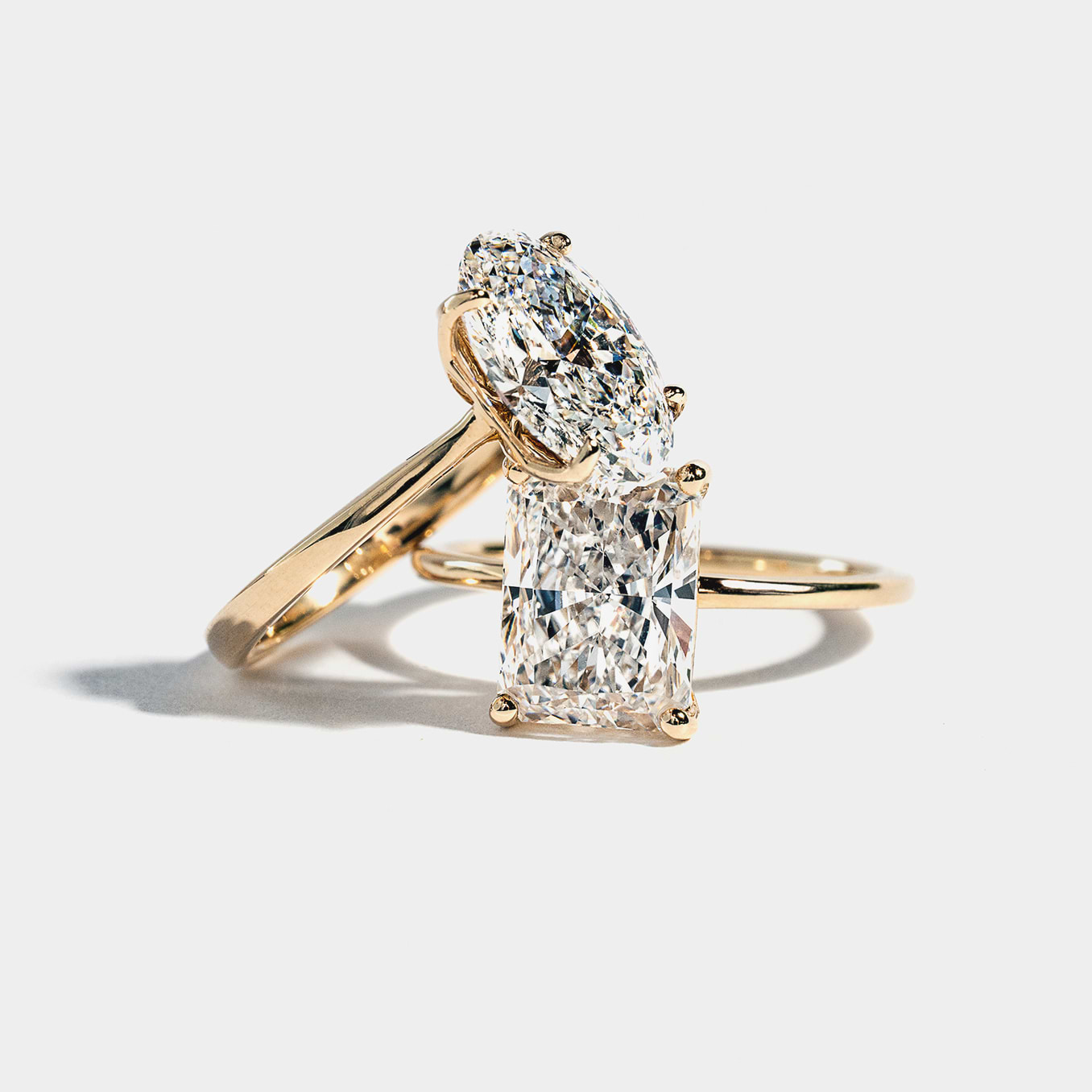
Solitaire: Best for a classic, minimalist look. Solitaire engagement rings keep the design focused on the center stone.

Side Stone: Best for adding extra sparkle while keeping the center diamond as the focal point.
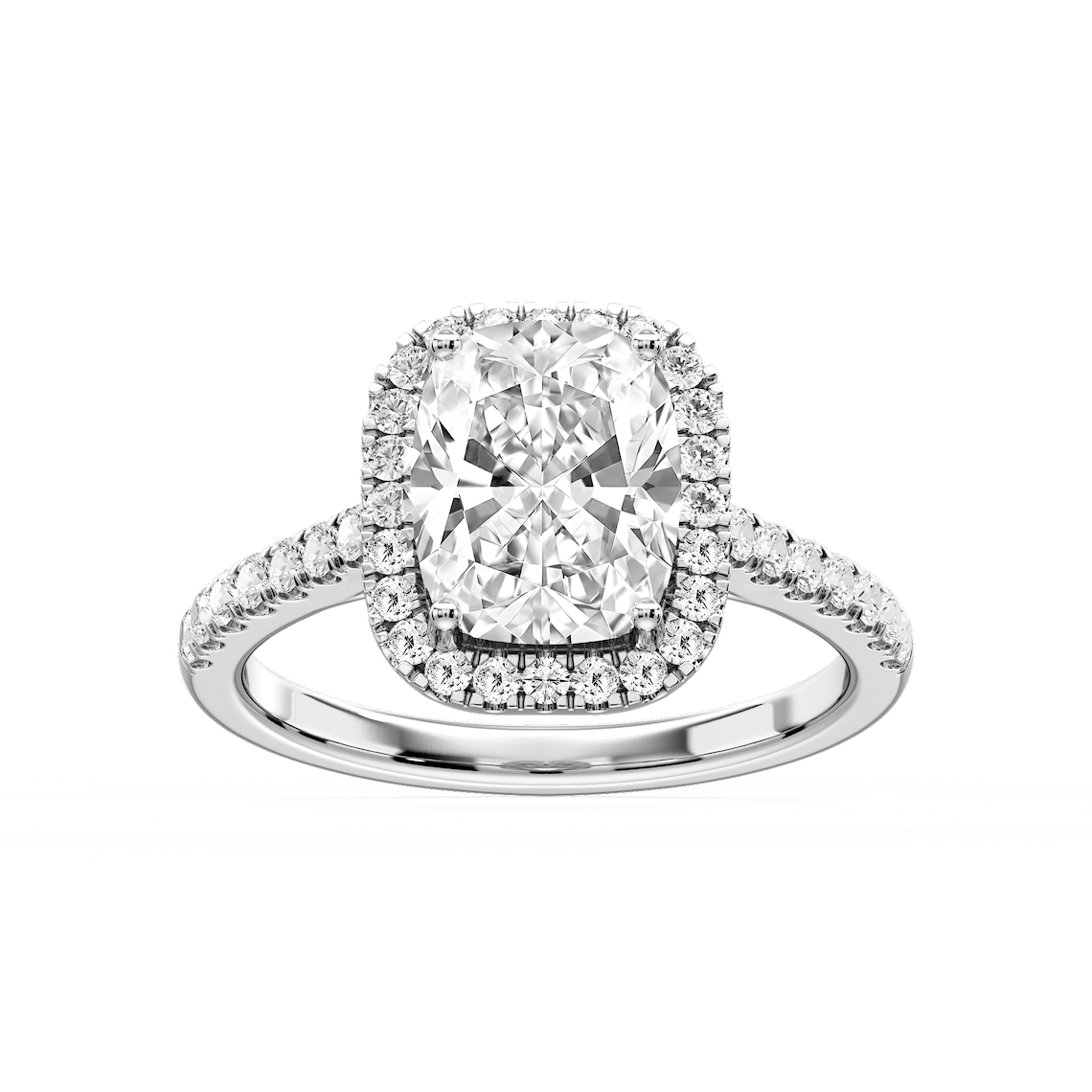
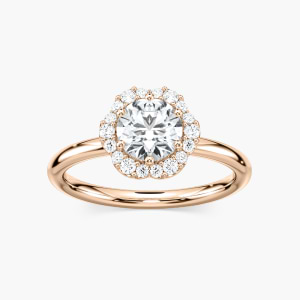
Halo: Best for creating a more substantial-looking center stone and adding overall sparkle.
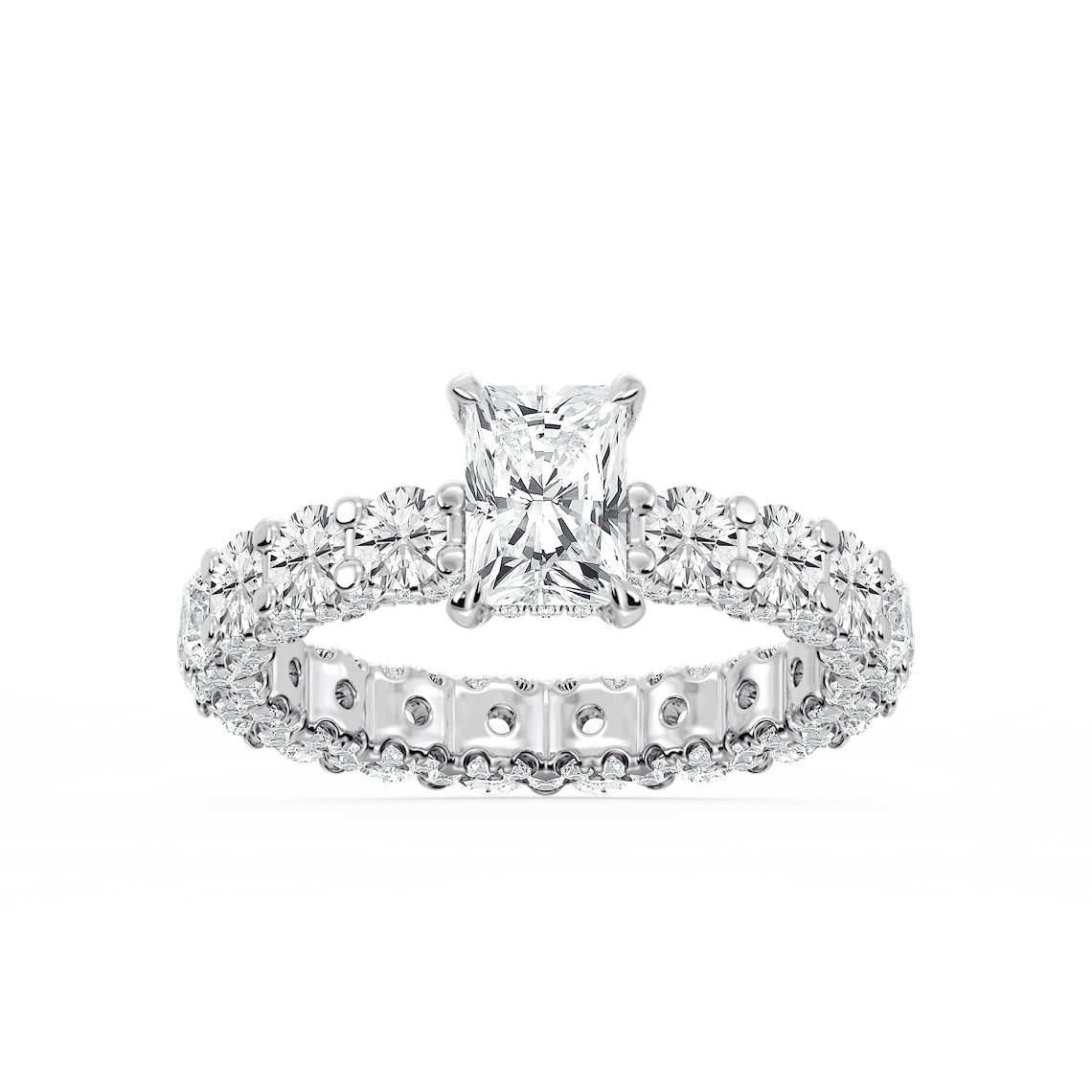
Hidden Halo: Best for adding sparkle beneath the center diamond. Hidden halo engagement rings offer this detail without changing the clean view from above.
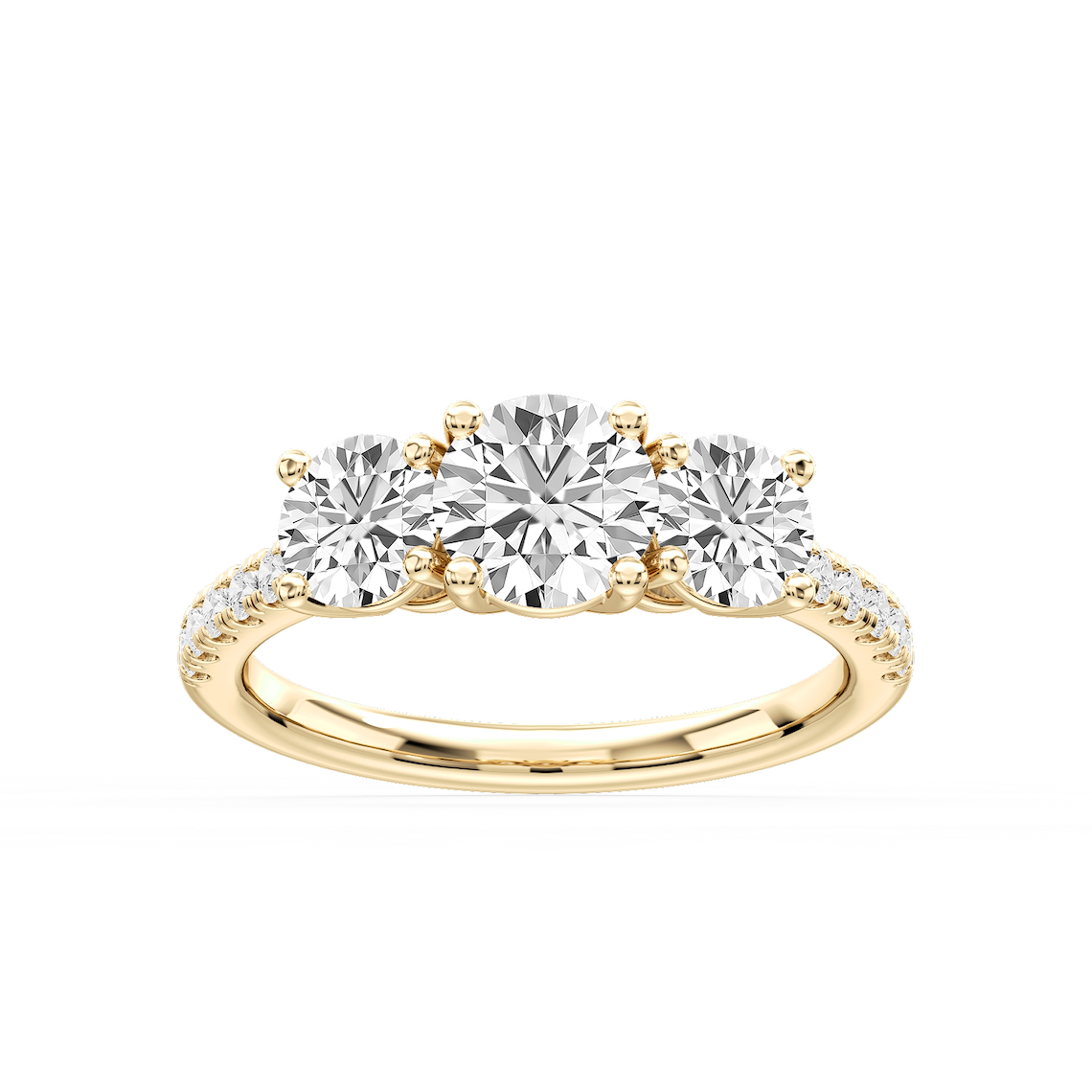
Three-Stone: Best for a balanced design that frames the center diamond with two side stones.
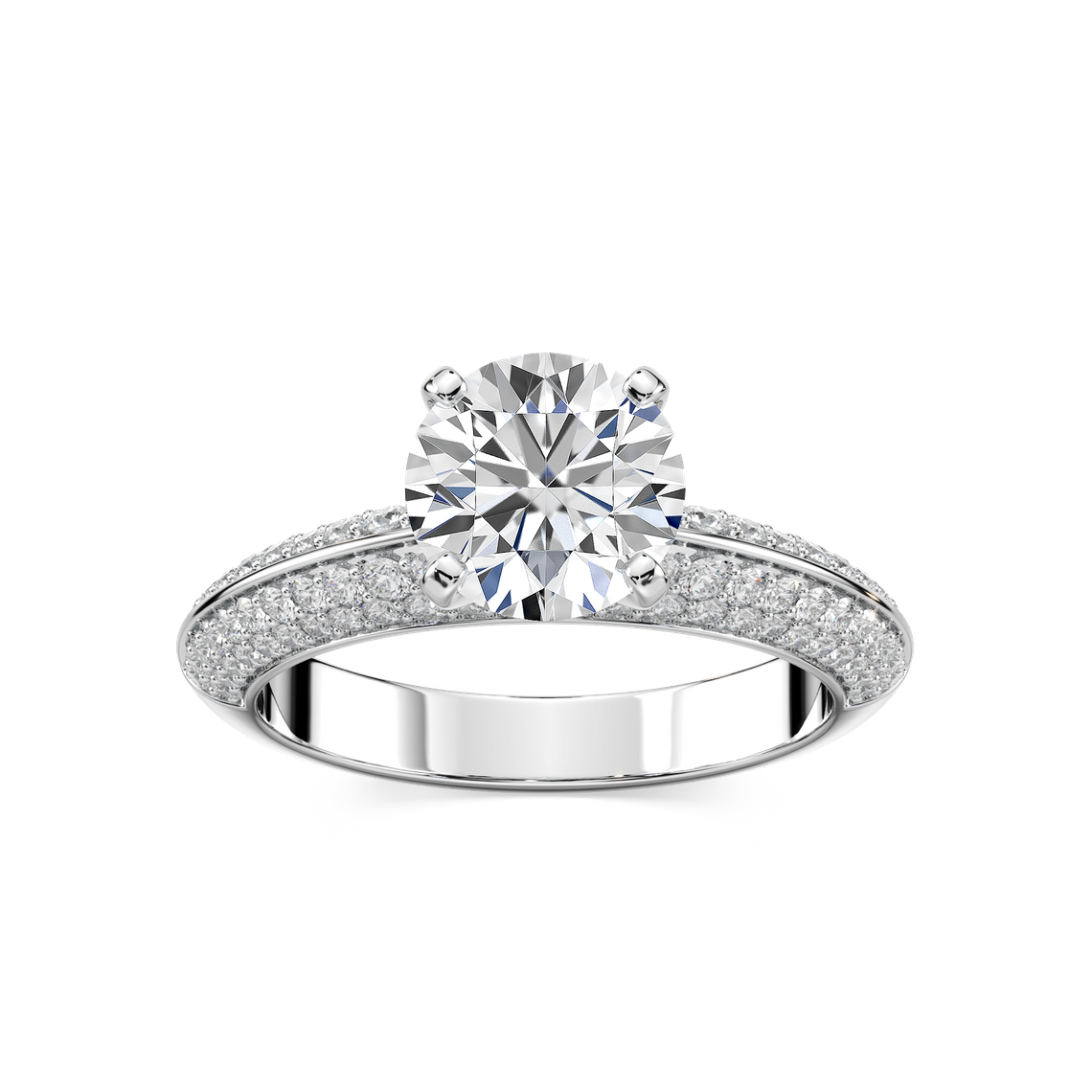
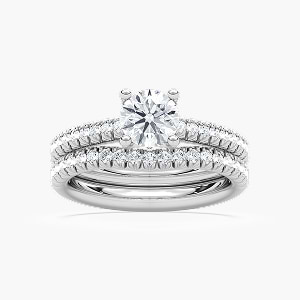
Pavé: Best for adding continuous sparkle along the band without taking attention away from the center stone.
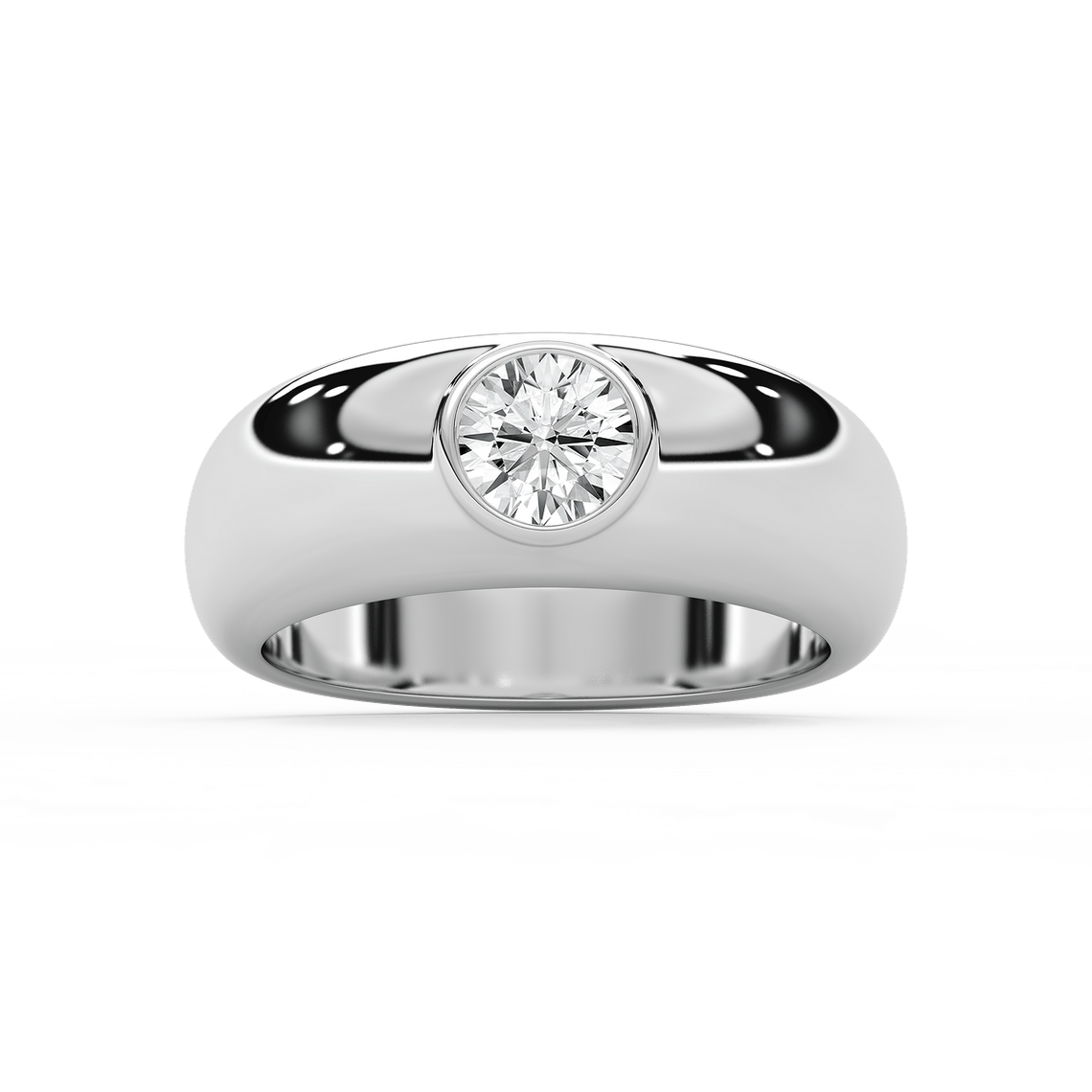
Bezel: Best for a sleek, modern look and added protection around the diamond's edges.
Match the Setting to Your Lifestyle
Think about daily wear before choosing a design. An active partner may prefer a lower-profile setting such as a bezel or flush mount for a more practical everyday option. Someone who loves glamour may prefer a side stone engagement ring or halo design. Consider the level of visibility, detail, protection, and maintenance you want.
Consider How the Setting Changes the Look
The same center diamond can look different in a solitaire, halo, or side stone setting. Review the complete ring rather than choosing a setting from one photo alone.
CHOOSE THE RIGHT METAL FOR YOUR ENGAGEMENT RING
Platinum, 14K gold, and 18K gold are common choices for engagement rings. Platinum has a naturally white finish and is known for its durability. White gold offers a bright, versatile appearance, yellow gold has a warm, traditional tone, and rose gold has a distinctive blush hue. When choosing a metal, consider:
- Durability: Think about how the ring will be worn and whether the wearer has an active lifestyle.
- Color and appearance: Consider whether you prefer a cool white, warm yellow, or blush-toned finish and how it complements the diamond.
- Existing jewelry: Matching the metal to pieces your partner already wears can help create a cohesive look.
- Maintenance: Different metals have different care and upkeep needs, so consider how much maintenance you're comfortable with.
- Budget: Metal choice can affect the overall cost of the ring, so factor it into your total budget alongside the diamond and setting.
CONSIDER DIAMOND PROPORTIONS, PERFORMANCE, AND APPEARANCE
The grading report provides important specifications, but the individual diamond still deserves a close look. Review available images or videos alongside the diamond's measurements, proportions, symmetry, polish, and light-performance information.
Pay Attention to Common Visual Issues
Elongated shapes can show a bow-tie effect, which appears as a darker band across the center. Step-cut shapes such as emerald can show windowing, where the center looks more transparent and lets you see through the stone rather than seeing strong reflections. Uneven symmetry and poor light return can also affect appearance.
DECIDE BETWEEN ONLINE AND IN-STORE SHOPPING
Advantages of Buying Online
- Wider selection: Browse more diamond shapes, sizes, settings, and metals from home.
- Easier comparison: Compare prices, specifications, grading reports, and images side by side.
- More time to decide: Review the details at your own pace without making a decision in-store.
Buying in-store lets you see the ring in person, compare how different settings look on your hand, and assess the diamond up close. Online shopping offers greater convenience and makes it easier to compare specifications and prices. The better option depends on whether you value hands-on evaluation or broader selection and comparison.
What to Check When Buying Online
When learning how to buy a lab-grown diamond online, review product images, available videos, grading information, return and exchange terms, warranty information, resizing details, shipping information, customer reviews, and support.
To get the right size, use our ring size guide or borrow a ring your partner already wears to estimate it.
WATCH OUT FOR THESE COMMON LAB-GROWN DIAMOND RING BUYING MISTAKES
Most buying mistakes happen when buyers focus on one specification instead of looking at the diamond and ring as a complete purchase.
| Common mistake | What to do instead |
|---|---|
| Choosing carat weight over cut | Compare cut and light performance before prioritizing a larger carat weight. A larger diamond does not automatically look better if the cut does not perform well. |
| Paying for clarity you don't need | Look for an eye-clean diamond rather than automatically choosing the highest clarity grade. If inclusions are not visible without magnification, you may be able to put more of your budget elsewhere. |
| Ignoring the actual diamond video | Review the available images and videos of the diamond so you can assess its appearance rather than relying only on its grading information. |
| Buying without checking certification | Review the diamond's grading report and confirm its key details, including its 4Cs, measurements, and laboratory-grown identification. |
| Choosing a setting without considering lifestyle | Consider how your partner wears jewelry every day, along with the setting's visibility, protection, and maintenance needs. |
| Focusing only on the diamond price | Compare the complete combination of diamond quality, proportions, shape, setting, metal, certification, and craftsmanship rather than price alone. |
| Ignoring return, resizing, and warranty policies | Review the retailer's return, resizing, warranty, and shipping policies before placing the order so you know what support is available after purchase. |
QUICK STEP-BY-STEP LAB-GROWN DIAMOND BUYING CHECKLIST
- Determine your comfortable budget.
- Choose a preferred diamond shape.
- Prioritize cut and visual performance.
- Set acceptable color and clarity ranges.
- Compare carat weight and diamond measurements.
- Review the grading report.
- Choose your setting and metal.
- Review available images or videos.
- Check return, resizing, warranty, and shipping policies.
- Compare similar rings before purchasing.
LAB-GROWN DIAMOND ENGAGEMENT RING MYTHS
Myth 1: Lab-Grown Diamonds Are Fake Diamonds
Lab-grown diamonds are real diamonds. They have the same chemical composition, physical properties, and optical characteristics as mined diamonds. They are different from simulants such as cubic zirconia and moissanite, which are made from different materials.
Myth 2: Lab-Grown Diamonds Do Not Have the Same Physical Properties
Lab-grown diamonds have the same fundamental chemical composition and crystal structure as mined diamonds and share their key physical and optical properties.
Myth 3: A Bigger Diamond Is Always Better
Size is only one part of the purchase. Cut, proportions, shape, and overall appearance can have a greater effect on what you see when the ring is worn.
Myth 4: You Need the Highest 4C Grade
The highest grades are not automatically the best use of your budget. Look for the combination of cut, color, clarity, and carat weight that gives you the appearance you want at a comfortable price.
Myth 5: Lab-Grown Diamonds Do Not Need Certification
Independent grading still matters. The report documents the diamond's characteristics and confirms its laboratory-grown identity.
FINAL THOUGHTS
Choosing a lab-grown diamond engagement ring is easier when you compare the whole purchase rather than chasing one specification. Start with a comfortable budget, choose a shape you love, prioritize cut and visual performance, then balance color, clarity, carat weight, setting, and metal.
Planning ahead? Explore our lab-grown diamond wedding bands to see how your engagement ring and wedding band will work together.
Shop Lab-Grown Diamond Engagement Rings
FAQS
What should I look for when buying a lab-grown diamond engagement ring?
Start with your budget, then compare shape, cut, color, clarity, and carat weight. Review the grading report, available images, setting, metal, and purchase policies before ordering.
Which of the 4Cs matters most for a lab-grown diamond?
Cut is often the most important factor for brilliance because it affects how the diamond interacts with light. The right balance depends on your priorities.
What is the best clarity for a lab-grown diamond engagement ring?
There is no single best clarity grade. Look for a stone whose inclusions are not readily visible without magnification. VS and SI grades can offer value when the individual diamond looks clean to the naked eye.
Is certification important for lab-grown diamonds?
Yes. Independent grading reports document a diamond's characteristics, including its 4Cs, and identify it as laboratory-grown. IGI is the leading independent laboratory for grading lab-grown diamonds.
How much should I spend on a lab-grown diamond engagement ring?
Start with an amount that feels comfortable for the complete ring. Focus on the combination of diamond quality, size, setting, and metal rather than a fixed spending rule.
Is a larger lab-grown diamond better than a smaller one with better cut quality?
Not necessarily. Cut has a major effect on brilliance and visual performance. Compare cut, proportions, shape, measurements, and overall appearance before paying more for extra carat weight.
What should I check when buying a lab-grown diamond ring online?
Review the individual diamond's grading report, specifications, images or video, setting details, metal, and policies for returns, resizing, warranty, and shipping.

